Posted on Leave a comment

MANCENT Blog: Hail, bright Cecilia!

Rosemary Broadbent

Living through a pandemic, surviving a long period when the performance of music in public practically ceased, and the terribly sad experience of seeing a great Gothic cathedral church devastated by fire . . sound familiar? This actually describes the experience of the young Henry Purcell, born one year before the Restoration of the monarchy in 1660, and living through the Great Plague and the Great Fire of London. No fewer than eighty-six churches were destroyed, but the greatest loss was Old St. Paul’s, a hundred feet longer than Salisbury Cathedral, and outstripped in the height of its spire only by its counterpart in Lincoln. Purcell’s life was short but prolific – so short that he will have seen Christopher Wren’s St.
Paul’s rising stone by stone, but did not live to see it consecrated and brought into use. After the virtual elimination of large-scale music during the Commonwealth, it is no wonder that the musicians of London decided to set up an annual celebration of the power of music on St. Cecilia’s Day, November 22nd . Purcell wrote music for the first celebration in 1683, but our MANCENT session on October 12th takes its title and its focus from his second commission in 1692.

There must have been an element of competition amongst this tightly-knit group of musicians as each year a different composer was presented with the challenge of writing an Ode to St. Cecilia. It is no surprise, therefore, that Purcell’s second contribution, nine years on, reaches new heights of splendour and virtuosity. There will be much to enjoy in this music when we consider it together.
The organisers of the St. Cecilia celebrations in the 17th century ordained both the poet and the composer for each year’s offering. Sadly, they never succeeded in matching greatest poet of the
age, John Dryden, with the greatest composer, Henry Purcell. Dryden’s text was set by Giovanni Draghi in 1687, but Dryden’s refusal to swear allegiance to William and Mary the following year led to his disappearance from court life. It was not all loss, however, because his seclusion gave him the time to translate Vergil! John Milton had met a similar fate earlier, as his support for Cromwell and
the Commonwealth made it politic to disappear from London at the Restoration in 1660. Once again there was a silver lining, as he used his enforced leisure to write Paradise Lost.

We have to wait a long time to find an eminent British composer setting the words of an eminent poet, but our second session, on October 19th, celebrates three remarkable conjunctions: John Dryden set by Hubert Parry, Shakespeare set by Ralph Vaughan Williams, and W. H. Auden set by Benjamin Britten. Unlike many of the seventeenth-century odes, these works have remained
in the repertory, and they provide a fascinating picture of the revival of English choral music after a long fallow period. Saint Cecilia lives again, especially in the work of Benjamin Britten, who was born
on her feast day.

Details on MANCENT’s Course: Hail Cecilia can be booked here.
Posted on Leave a comment

MANCENT 2023 Programme now out

Just in time for the bank holiday weekend, MANCENT is publishing its Autumn programme.

Courses will start in September and there is a wide range of humanities courses from Music to literature to History and Archaeology.

We are also reviving our Cultural day trips to various museums and sites and hope that will once again prove popular.

The full programme is on the website and can be booked either by contacting the lecturers or with many of them the online courses via Eventbrite links, which are very popular with our overseas students.

All the best and we look forward to seeing you soon at one of our events.

Birgitta Hoffmann
MANCENT Course Director and her team.

Posted on Leave a comment

The Ancient Greeks – Zenith

 Michael Tunnicliffe

The Ancient Greeks were at the height in the 6th-5th centuries. Though divided into competing city states there were able to unite for a time to meet the challenge of invasion by the might of the Persian Empire. This period also saw the flourishing of Athenian democracy and the building of works such as the Parthenon. Greek dramatists were also appearing on the scene, and the first philosophers, the pre-Socratics, were beginning to ask fundamental questions. Yet simmering tensions between Athens and Sparta were not far below the surface. The topic will continue in the summer term.


MINIMUM No: ……8…….MAXIMUM No  25 (please check with venue provider):..


PRICE:………..£80. CONCESSIONS?:……….No…………………………………………………..


Recommended reading (for publication in brochure):    


Robin Osborne 2009 (2nd ed.) Greece in the Making; 1200-479BC Routledge  

Simon Hornblower 2002 (3rd ed.) The Greek World 479-323, Routledge

Sarah Pomeroy et al 2009 A Brief History of Ancient Greece Oxford University Press


CONTACT ADDRESS FOR BOOKINGS (this will be printed in the brochure):

………………………………………………………………………………………………………………………………….

Michael Tunnicliffe 5 St George’s Way, Northwich, CW9 8XG, 01606 42116 mtunni@sky.com

Posted on Leave a comment

Today we are 12 years old!

Posted on Leave a comment

Past Courses

I know some of you organise lectures for the U3A or local societies and are looking for suitable topics and lecturers. Many of our lecturers are available for one off lectures and will be happy to discuss terms with you.

After a lot of requests, we decided to leave the past courses online, so you can see what we have already done, and what the area of general interest of our lecturers is. I hope you approve.

Posted on Leave a comment

New exhibition co-curated by our lecturer Anthony Burton

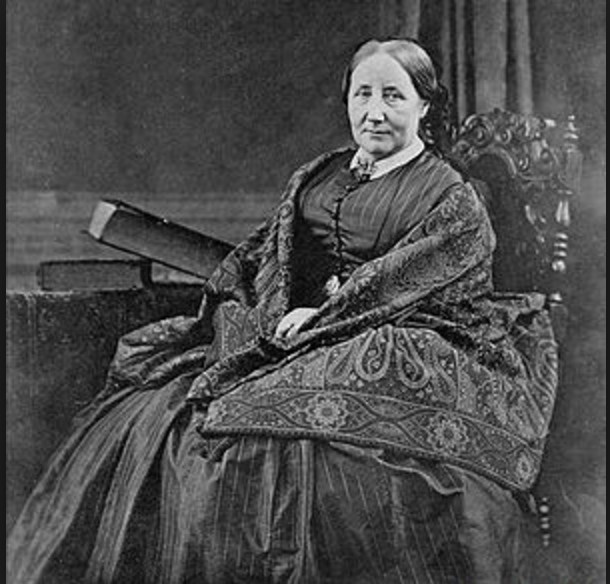
The Elizabeth Gaskell house in Manchester is  showing from February an exhibition on
Elizabeth Gaskell’s Manchester

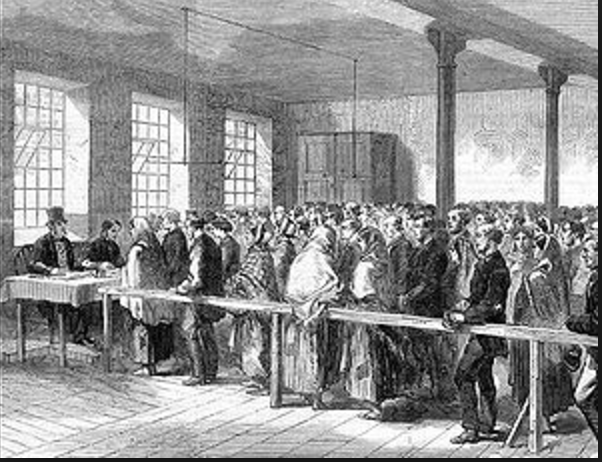
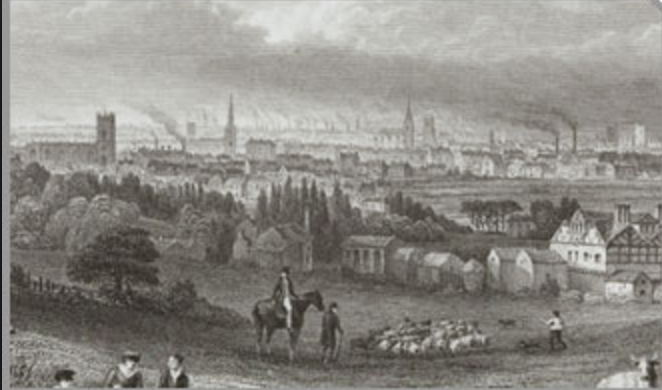
Elizabeth Gaskell lived in Manchester from 1832 until her death in 1865, a time of huge change and expansion for the city, which raised many challenges for its residents from the coming of the railways and the Free Trade Movement and the Reform Acts to the Cholera and the Cotton Famine on the other.

The exhibition focuses on the Politics, Commerce, Transport, Learning, Churches, the Mills, the Poor, the Shops, Art, Music and Literature.

Anthony is hoping to offer a day school in the Summer term on the topic

The Elizabeth Gaskell House at 84 Plymouth Grove, Manchester M13 9LW

is open Wednesdays, Thursdays and Sundays from 11.00am – 4.30pm (last admission 4pm) enquiries: 0161 273 2215 or enquiries@elizabethgaskellhouse.co.uk


Posted on Leave a comment

What is Heka? – An introduction to the Course

Joanne Backhouse

fertility-figurine-2 The course

Heka: The Magical Arts of Ancient Egypt

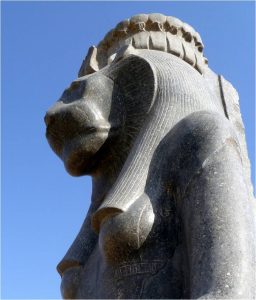
will focus on the concept of Heka (magic) in ancient Egypt. Heka was a divine force imbued in deities, the king and the dead.  It could be used for good or bad, private or state purposes.  This course will focus on two main areas.  Firstly, deities and ritual practitioners (priests and priestesses), this will include the god Heka and and the gods as healers, for example Sekhmet.  Secondly, the course will examine the objects and images created to channel the power of heka, including execration and fertility figurines, amulets, wands and spell books.

sekhmet-figure-3Although much, if not all, of Egyptian art was magical this course will examine images and objects created specifically for magical practice. A broad definition of magic will be used; which is, any activity that seeks to obtain its goal outside the natural laws of cause and effect, will be deemed magical.

This includes rituals in the home, temples and in the funeral realm; most rituals in ancient Egypt used a combination of recitation and action.

The lectures will demonstrate the assimilation of magic, medicine and religion in ancient Egypt and illustrate how magical practice was part of everyday life. As Egyptologist, Robert Ritner said, ‘one man’s magic is another man’s religion’.  The course also presents a rare opportunity to handle and photograph many magical objects from ancient Egypt at Manchester Museum.

execration-figure-1